
“Brain rot” became Oxford’s word of the year for a reason: it names something millions of parents already feel — that endless scrolling is doing something to their children’s minds, and not something good. The term is crude, unscientific, half a joke. But the instinct behind it is correct. The question is what to do about it, and here most of the conversation goes wrong.
Every civilization reshapes the human mind. Writing loosened our grip on oral memory but made complex knowledge possible. Print changed how ideas moved. Industrialization trained people to live by clocks and systems. Each shift provoked its own moral panic. Each one was also, in its way, right to worry.
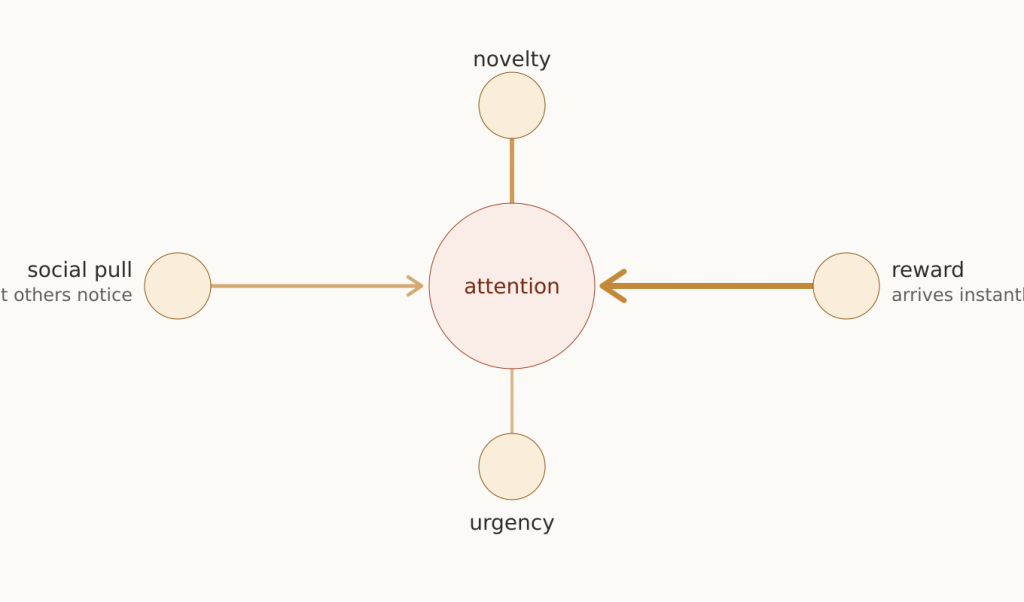
Digital civilization is doing something more intimate than any of those. It has entered the space between stimulus and thought. Algorithms decide what appears before us, how long it stays, what comes next — learning which images stop our fingers, which emotions keep us scrolling, how fast a reward must arrive before we lose interest. This is the actual mechanism behind “brain rot”: not moral decay, but attention and reward circuitry being trained, repeatedly, by a system optimized to capture rather than build them.
Adults struggle to resist this. Children, whose attention and executive function are still under construction, aren’t just consuming media — they’re having their minds built by an environment optimized against them.
The usual answer is protection: less screen time, blocked platforms, delayed devices, a “digital detox.” Protection matters. A developing brain shouldn’t be left alone against systems engineered to capture it. But protection can’t be the whole answer, because we cannot prepare children for digital civilization by hiding them from it — and “brain rot” won’t be cured by abstinence alone, any more than an unused muscle is cured by rest.
The Cave Won’t Save Us
There’s a comforting fantasy behind a lot of parenting advice: build a strong enough wall, and you can preserve the pre-algorithmic mind. But there is no wall high enough, because there is no going back. Today it’s TikTok and short-form video. Tomorrow it’s infinite generated entertainment and emotionally responsive AI companions, personalized in real time to each child’s desires and vulnerabilities. The technology only gets more persuasive.
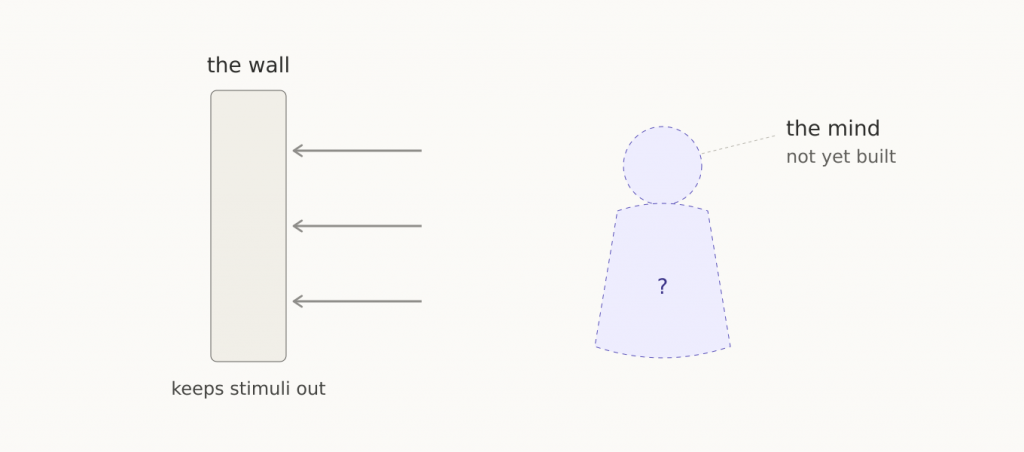
A child protected by restrictions is safe only as long as the restrictions hold. Eventually every child leaves the protected environment — and a mind that has never practiced governing its own attention doesn’t become free just because the device is gone. External control has simply postponed the moment internal control becomes necessary. A wall keeps something out. It builds nothing within.
We’re Training Children for the Wrong Competition
Much of education still prepares children to out-compete machines on machine territory: remember more, calculate faster, produce the “correct” answer. AI has already won that competition. Training children to be faster information processors isn’t ambitious anymore — it’s preparation for a fight humanity has already lost.
The goal has to move elsewhere. Machines retrieve information; children need to learn what’s worth knowing. Algorithms optimize engagement; children need to learn what deserves attention. AI generates answers; children need to learn how to question the assumptions behind them. The human advantage won’t come from out-processing machines — it will come from judgment, sustained intention, and meaning-making in a world of unlimited information and stimulation.
The First Thing to Transcend Is Our Own Wiring
Technology didn’t invent the human hunger for novelty, approval, and instant reward — it industrialized it. We notice what changes. We prefer rewards now over rewards later. We avoid unnecessary effort. We take our cues about what matters from other people. These instincts once kept us alive. Inside the attention economy, they’re exploited.
Infinite scroll runs on our craving for novelty. Notifications run on our sensitivity to social signals. Recommendation engines run on our preference for the familiar. The danger isn’t that technology overpowers the brain from outside — it’s that technology learns to operate the brain from inside, using our own impulses as its interface.
So transcending digital civilization doesn’t mean rejecting technology. It means becoming less governable by the instincts technology has learned to exploit. A child doesn’t become free by knowing an algorithm exists. Freedom starts when a child can feel an impulse without obeying it, notice a distraction without following it, and stay with something meaningful after the novelty is gone. That’s not passive resistance — it’s a trained capacity.
Attention Is the Foundation of Freedom
We talk about attention like it’s a school skill. In digital civilization, it’s larger than that — it’s the foundation of personal sovereignty. What repeatedly gets our attention becomes memory. Memory shapes belief. Belief drives choice. Choices, repeated, become identity.
If a child can’t decide what gets their attention, other systems decide what that child learns, wants, fears, and eventually becomes. Attention isn’t just concentration — it’s authorship over one’s own mind.
This is why working memory, inhibitory control, and cognitive flexibility matter beyond the classroom. Working memory holds an intention steady against competing stimuli. Inhibitory control creates a pause between wanting and acting. Cognitive flexibility lets a child step outside a pattern instead of staying trapped in it. Above all of these sits metacognition — the ability to watch your own mind at work, and ask: What’s pulling me right now? Why do I want to keep going? Did I choose this, or was the choice designed for me? A mind that can ask these questions has already started rising above the environment acting on it.
These are also the exact capacities BrainEscape’s neurodevelopmental assessment is built to make visible — turning “something feels off with my child’s focus” into a measurable, trackable picture.
The Goal Isn’t Immunity. It’s Return.
No child will become permanently focused. No adult is beyond distraction — and that shouldn’t be the bar. A strong mind isn’t one that never wanders; it’s one that knows how to come back: from distraction to intention, from stimulation to stillness, from impulse to judgment, from consuming what’s offered to choosing what’s valuable.
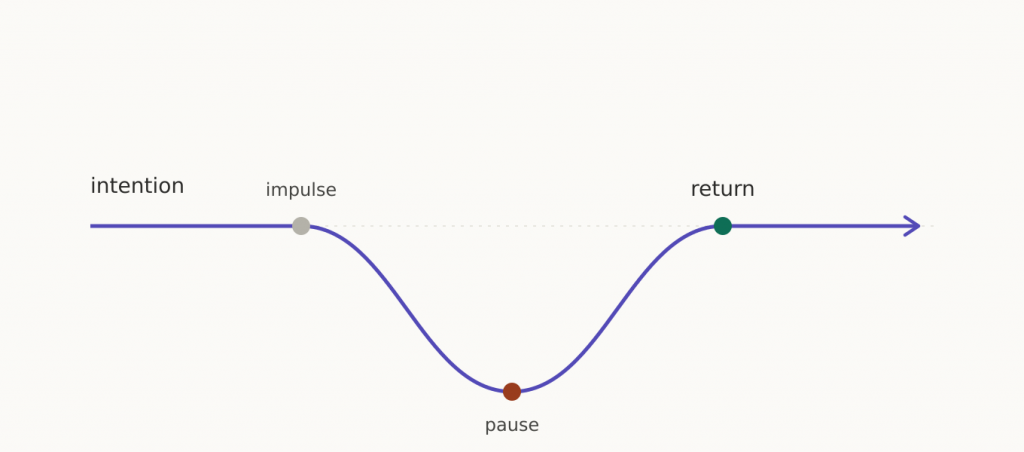
This capacity to return may be one of the most important forms of resilience this century requires. It can’t be installed with a lecture on digital wellbeing — it has to be practiced. Children build it by reading past the point a story gets hard, solving a problem instead of requesting the answer, sitting in boredom long enough to make something of it, holding a goal, making a mistake, adjusting, and continuing. The brain is shaped by what it repeatedly does. If digital environments rehearse interruption and instant gratification, children need environments that rehearse sustained attention, delayed reward, and intentional choice. We shouldn’t leave neuroplasticity entirely to the attention economy.
From Defensive Parenting to Deliberate Development
Parents need boundaries. Platforms need regulation. Children need protection from exploitative design. But these are defensive measures. Defense asks: how do we reduce exposure? Development asks: what capacities does the child need to build? We need both — but protection should buy the time and space for development to happen, not become a permanent substitute for it.
The real measure of success isn’t how well a child follows the rules while being watched. It’s what happens when no one is. Can the child stop? Choose? Stay present when something important is slow, hard, and unrewarded? Use a powerful tool without letting the tool set the terms? These are questions of character and cognition — not screen-time accounting. It’s the same question we ask families to sit with before reaching for another screen-time limit.
Why We’re Building BrainArk
If digital experience is going to shape children’s brains regardless, some of that experience should be deliberately designed to strengthen the capacities children need to stay free.
Could screen time build sustained attention instead of fragmenting it? Exercise memory instead of outsourcing it? Ask a child to inhibit an immediate response, plan ahead, adapt, and persist? Could a product be designed to finish its work and let the child leave — instead of treating every extra minute of consumption as a win?
That’s the bet behind BrainArk. It isn’t a “cure” for brain rot — brain rot isn’t a diagnosis; it’s a symptom cluster with no clinical definition, and no app should claim to treat it. What we can do is address the actual mechanism underneath the label: attention, memory, and self-regulation that atrophy from disuse and get retrained, one scroll at a time, toward fragmentation and immediacy. If that’s the direction the brain gets trained in by default, the fix isn’t zero screen time — it’s screen time trained in the opposite direction. That’s the thinking behind our Neuro-AI platform: using digital biomarkers to see, not guess, whether a child’s attention is actually being strengthened.
The answer isn’t to frighten parents with a scary new syndrome. It’s to expand what we mean by preparation. Children don’t need to reject technology — they need to become more conscious than the systems competing for their attention: using AI without outsourcing judgment, entering digital spaces without surrendering intention, benefiting from technological power without becoming its predictable product.
You can try BrainArk today, or read more about how we work with educators and healthcare professionals to put this into practice.
A Mind the Algorithm Can’t Fully Own
The future won’t belong to the children who were best hidden from technology, or to the ones who adapted most completely to the algorithm’s demands. It will belong to those who can move between worlds — using machines without imitating them, engaging with technology without being absorbed by it, protecting the distinctly human capacities from which judgment, imagination, and meaning emerge.
We can’t stop digital civilization from shaping the brain. We can decide whether that process stays accidental or becomes deliberate.
This isn’t an effort to preserve the old mind. It’s an effort to build the next one.
Want more on this? Explore our resource library for the latest in NeuroAI and child brain development research.